
Warming up before exercise is one of the most important habits for anyone who wants to stay active, improve performance, and enjoy a safer workout. A proper warm up prepares your body and mind for physical activity by gradually increasing your heart rate, improving blood flow, and getting your muscles ready to move. Whether you are doing a home workout, strength training, running, cycling, or playing a sport, spending a few minutes warming up can make your exercise session more comfortable and effective.
Many people skip their warm up because they feel it takes too much time. However, you do not need a long or complicated routine. A good warm up can take around 5 to 10 minutes and can be adjusted according to the type of exercise you plan to do. Understanding how to warm up before exercise can help you build a better workout routine and prepare your body for physical activity.
Why Is a Warm Up Important Before Exercise?
A warm up gradually prepares your body for exercise instead of asking your muscles to suddenly work at a high intensity. When you begin with gentle movements, your heart rate increases slowly and your muscles receive more blood and oxygen.
A proper warm up can also improve your range of motion and help your body move more comfortably. It gives you an opportunity to focus on your posture, breathing, and movement technique before increasing the intensity of your workout.
Another benefit of warming up is that it helps you mentally prepare for exercise. If you are coming from work, studying, or a busy day, a short warm up gives you time to shift your attention toward your workout.
How Long Should You Warm Up Before Exercise?
For most people, a warm up of about 5 to 10 minutes is enough before a normal workout. The exact amount of time depends on the type and intensity of exercise.
If you are planning a light workout, a short warm up may be enough. If you are preparing for running, heavy strength training, intense sports, or another demanding activity, you may need a longer and more specific warm up.
The most important thing is to begin slowly and gradually increase your movement. Your body should feel prepared rather than tired before the main workout begins.
Start With Light Cardio
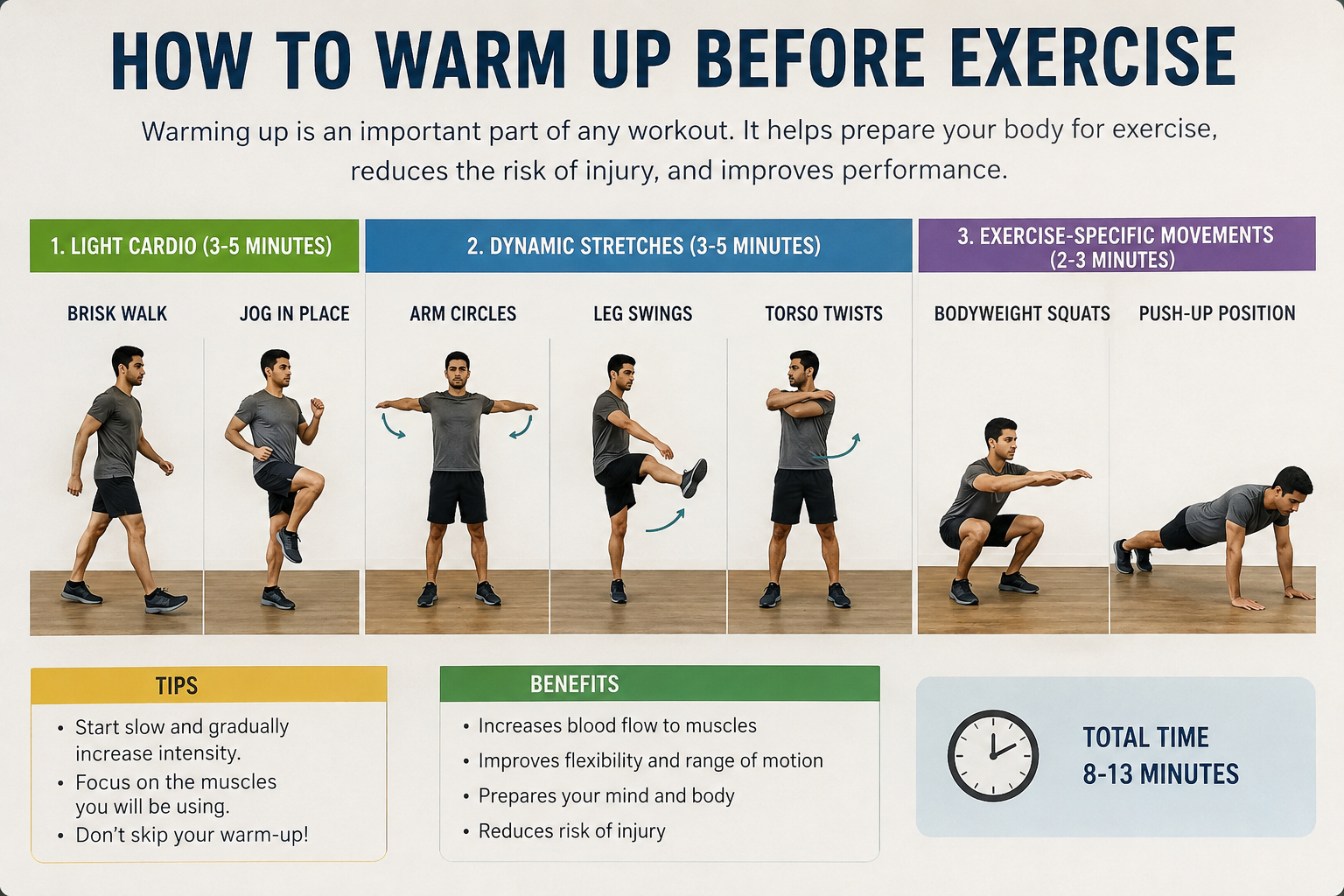
One of the easiest ways to warm up before exercise is to begin with light cardiovascular activity. This can increase your body temperature and gently raise your heart rate.
You can walk around your home, march in place, use a stationary bike, jog slowly, or perform gentle step movements. Start at an easy pace for about 3 to 5 minutes.
For example, if you plan to go running, begin with a brisk walk and then slowly move into an easy jog. This gives your body time to adjust before you increase your running speed.
Light cardio is especially useful because it warms up many major muscle groups at the same time.
Try Dynamic Stretching
Dynamic stretching involves controlled movement through a comfortable range of motion. It can be a useful part of a pre workout warm up because it prepares your muscles and joints for the movements you are about to perform.
Examples include arm circles, leg swings, walking lunges, bodyweight squats, hip rotations, and controlled knee lifts.
The goal is not to force your body into a deep stretch. Instead, perform each movement smoothly and gradually. Dynamic movements can be especially helpful before activities that require running, jumping, lifting, or changing direction.
Perform Exercise Specific Movements
A good warm up should match the workout you are going to perform. After light cardio and dynamic movements, spend a few minutes practicing easier versions of the exercises in your workout.
For example, if you plan to do squats, begin with several slow bodyweight squats. If you are going to perform push ups, start with a few easier repetitions or wall push ups.
Before strength training, you can also perform lighter sets before using your normal training weight. This allows you to practice your movement pattern and prepare your body for the upcoming exercise.
Exercise specific warm ups are particularly useful because they prepare your body for the exact movements you will perform.
Warm Up Before Strength Training
If your workout involves strength training, your warm up should prepare the muscles and movements involved in your session.
Start with a few minutes of light cardio. Then perform dynamic movements that involve the areas you plan to train.
For a lower body workout, you might include bodyweight squats, leg swings, hip circles, and walking lunges. For an upper body workout, you might include arm circles, shoulder movements, light resistance exercises, and gentle push ups.
When you begin lifting weights, use a lighter weight for your first set. Gradually increase the resistance as your body becomes ready.
Warm Up Before Running
Running places repeated demands on your legs, hips, and core, so it is helpful to prepare these areas before starting at a fast pace.
Begin with a few minutes of brisk walking. Then move into an easy jog. You can also include controlled leg swings, walking lunges, and gentle high knee movements.
If your workout includes intervals or sprinting, spend more time warming up before reaching high speeds. Start slowly and gradually increase your pace.
A good running warm up should leave you feeling ready to run, not exhausted.
Avoid Starting With Intense Exercise
One common warm up mistake is starting too hard. Jumping directly into sprinting, heavy lifting, or intense jumping exercises can make the workout feel harder than necessary.
Your warm up should gradually increase the intensity. Think of it as a transition from rest to exercise.
Start with simple movements and increase the speed or difficulty little by little. By the time you begin your main workout, your body should feel warm and ready.
What About Static Stretching?
Static stretching involves holding a stretch in one position for a period of time. It can be useful as part of general flexibility training, but it is not always the best way to begin an intense workout.
Before exercise, many people prefer dynamic movements because they keep the body active and prepare it for movement. Longer static stretching can be included later in your workout or during a separate flexibility session.
If you enjoy gentle static stretching before exercise, keep it comfortable and avoid forcing your muscles into painful positions.
Listen to Your Body During the Warm Up
Your warm up is also a good time to notice how your body feels. Pay attention to stiffness, discomfort, unusual pain, or a lack of energy.
Normal warm up sensations include gradually increasing breathing, mild muscle activity, and a feeling of becoming warmer. Sharp or unusual pain is different and should not be ignored.
If something does not feel right, reduce the intensity or stop the activity. A warm up should prepare your body, not push it beyond its limits.
Common Warm Up Mistakes to Avoid
Skipping the warm up is one of the most common mistakes, but there are several others worth avoiding.
Do not make your warm up so intense that you become tired before your workout. Avoid rushing through movements without paying attention to technique. Do not perform stretches aggressively or bounce into uncomfortable positions.
Another mistake is using the same warm up for every type of exercise. A warm up for running may look different from a warm up for strength training or a recreational sport.
Your warm up should match your planned activity and your current fitness level.
Simple 10 Minute Warm Up Routine
If you want a simple routine, you can start with 3 minutes of brisk walking or marching in place. Follow this with 2 minutes of arm circles, shoulder movements, and gentle torso rotations.
Next, spend 2 minutes performing controlled leg swings, bodyweight squats, and walking lunges. Finish with 3 minutes of exercise specific movements.
For a running workout, finish with an easy jog. For strength training, perform lighter versions of the exercises you plan to do.
This simple routine can help your body transition from rest into exercise without making the warm up unnecessarily complicated.
Final Thoughts
Learning how to warm up before exercise can make your workout routine more effective and comfortable. A good warm up gradually raises your heart rate, increases body temperature, prepares your muscles and joints, and helps you focus on proper movement.
Start with light cardio, include dynamic movements, and then practice movements related to your main workout. Keep the intensity gradual and listen to your body throughout the process.
You do not need an expensive machine or complicated routine to warm up properly. With just 5 to 10 minutes of simple movement, you can create a useful pre workout routine that prepares your body for physical activity. Make warming up a regular part of your exercise routine and give your body the preparation it deserves before every workout.