Flexibility and mobility are important parts of a healthy and active lifestyle. Many people focus on strength, cardio, or weight loss when they exercise, but flexibility and mobility are just as important for everyday movement. Good flexibility helps your muscles move through a comfortable range, while mobility helps your joints move properly and efficiently. Improving both can make daily activities easier, support better exercise performance, and help you maintain an active lifestyle.
If you spend many hours sitting, working at a desk, driving, or using a phone, your body may gradually become stiff. Regular movement and simple exercises can help reduce this stiffness. You do not need expensive equipment or complicated workouts to improve flexibility and mobility. With consistency, even a few minutes of stretching and movement each day can make a noticeable difference.
What Is Flexibility and Mobility?
Flexibility refers to the ability of a muscle to lengthen and allow movement. For example, being able to reach toward your toes requires flexibility in several muscles around your legs and hips.
Mobility is slightly different. It refers to how well a joint can move through its available range while you maintain control. Good shoulder mobility, for example, allows you to raise your arms comfortably above your head.
Both flexibility and mobility work together. Improving one without paying attention to the other may not provide the best results. A balanced exercise routine should include stretching, controlled movements, strength exercises, and regular physical activity.
Start With a Proper Warm Up
One of the best exercise tips for improving flexibility and mobility is to warm up before stretching or exercising. Cold muscles may not move as comfortably as warm muscles. A gentle warm up increases body temperature and prepares your muscles and joints for movement.
You can begin with five to ten minutes of easy walking, marching in place, or light cycling. After that, perform simple dynamic movements such as arm circles, leg swings, hip rotations, and gentle bodyweight squats.
A good warm up should feel comfortable and controlled. The goal is to prepare your body rather than make you tired.
Practice Dynamic Stretching
Dynamic stretching involves moving your body through a comfortable range instead of holding one position for a long time. It can be especially useful before workouts because it prepares the body for movement.
Examples include leg swings, walking lunges, arm circles, hip circles, and controlled torso rotations. Perform each movement slowly at first and gradually increase your range as your body becomes more comfortable.
Dynamic stretching can be included in your warm up before running, strength training, sports, or home workouts. It is also useful when you simply want to loosen your body after sitting for a long period.
Add Static Stretching to Your Routine
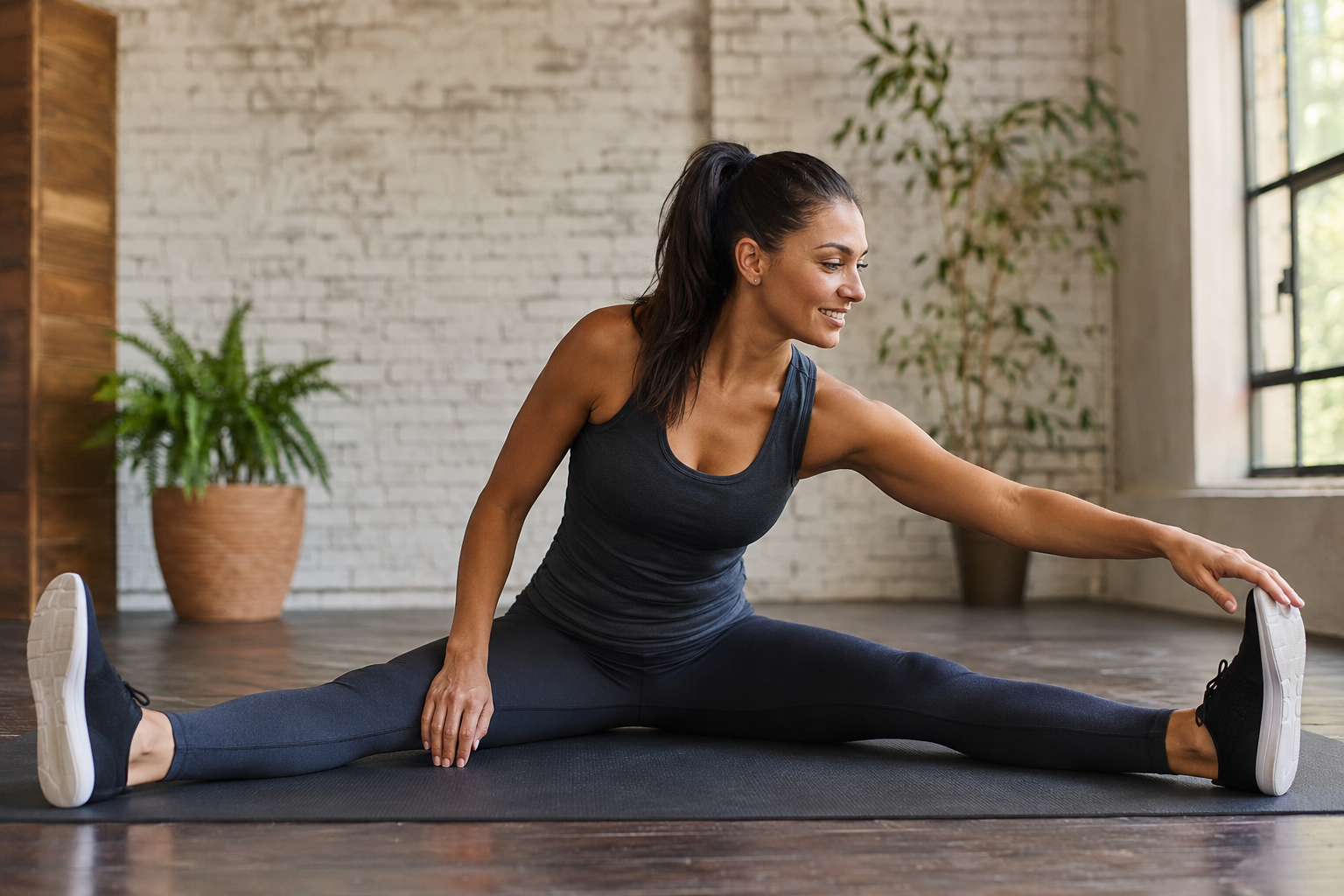
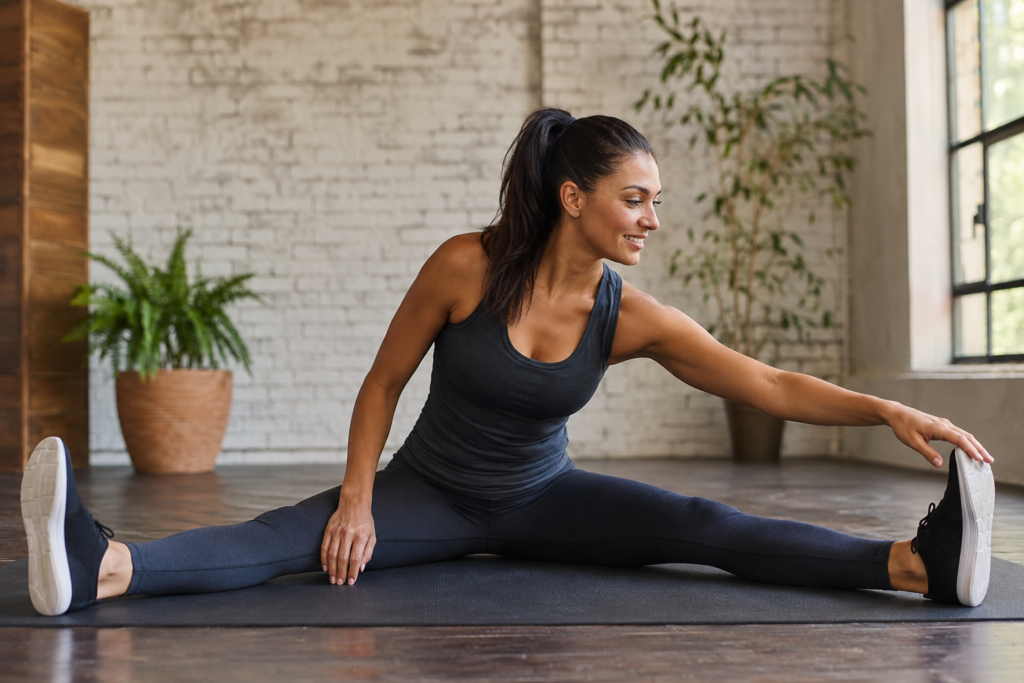
Static stretching involves holding a stretch in one position for a period of time. It can help improve flexibility when performed consistently.
Common static stretches include hamstring stretches, calf stretches, hip flexor stretches, chest stretches, and shoulder stretches. Hold each stretch gently without bouncing. You should feel mild tension but not sharp pain.
Static stretching can be useful after exercise or during a separate flexibility session. Try to breathe normally and relax while holding each position.
Improve Hip Mobility
The hips play an important role in walking, running, squatting, sitting, and many other movements. Limited hip mobility can make some activities feel uncomfortable or restricted.
Simple exercises such as hip circles, bodyweight squats, glute bridges, lunges, and controlled leg movements can help keep the hips active. You can also practice a gentle hip flexor stretch if you spend much of the day sitting.
When working on hip mobility, focus on slow and controlled movements. Quality is more important than moving through a very large range.
Work on Shoulder Mobility
Shoulder mobility is important for reaching, lifting, pushing, pulling, and many sports. Poor posture and long periods of sitting can sometimes make the shoulders feel tight.
Arm circles, wall slides, shoulder rolls, and gentle chest stretches can be useful additions to a mobility routine. Try to keep your movements smooth and avoid forcing your arms into uncomfortable positions.
Good shoulder mobility can also make upper body exercises feel more natural. Always maintain control rather than trying to achieve a large range quickly.
Do Mobility Exercises Regularly
Consistency is one of the most important exercise tips for improving flexibility and mobility. Doing a long stretching session once a month is unlikely to produce the same benefits as regular practice.
You can spend ten to fifteen minutes on mobility exercises several days each week. Some people may prefer a short routine every morning, while others may find it easier to stretch after their workout.
The best routine is one that fits naturally into your schedule. Making flexibility and mobility part of your normal exercise routine can help you stay consistent over time.
Focus on Your Breathing
Breathing is often overlooked during stretching and mobility exercises. Holding your breath can create unnecessary tension and make movement feel more difficult.
Try to breathe slowly and naturally. During a stretch, take relaxed breaths and allow your body to gradually become more comfortable. Deep breathing can help you stay relaxed and focused during your routine.
Instead of trying to force a deeper stretch, use your breathing to remain calm and controlled.
Avoid Bouncing During Static Stretches
One common mistake is bouncing while holding a static stretch. Fast or uncontrolled movements can place unnecessary stress on muscles and joints.
Instead, move slowly into the stretch and stop at a comfortable point. Hold the position while breathing normally, then gently return to the starting position.
Flexibility improves gradually. There is no need to force your body into extreme positions.
Strengthen Your Muscles
Flexibility and mobility are not only about stretching. Strength exercises can also help you develop better control around your joints.
Exercises such as squats, lunges, glute bridges, rows, push ups, and controlled core exercises can support overall movement. Strong muscles can help you control different positions and maintain stability while moving.
A balanced fitness routine should therefore include both strength training and flexibility exercises. Combining these areas can help create better movement quality.
Take Breaks From Sitting
Long periods of sitting can make your hips, back, shoulders, and legs feel stiff. One simple way to improve mobility is to avoid staying in the same position for too long.
If you work at a desk, stand up regularly and walk around for a few minutes. You can perform gentle shoulder rolls, hip movements, or calf raises during short breaks.
These small movement breaks can make your day more active and give your body opportunities to move through different positions.
Use Good Exercise Technique
Proper technique is important when performing flexibility and mobility exercises. Moving too quickly or using poor form can reduce the benefits of an exercise and increase the chance of discomfort.
Start with simple movements and learn how your body responds. Keep your movements controlled and avoid forcing a joint beyond a comfortable range.
If an exercise causes sharp pain, stop and reassess your technique. Persistent or severe pain should be discussed with a qualified health professional.
Make Progress Gradually
Improving flexibility and mobility takes time. Some people may notice changes within a few weeks of regular practice, while others may need longer. Your starting level, activity habits, age, and consistency can all affect your progress.
Do not compare your flexibility with another person’s flexibility. Focus on your own movement and gradual improvement.
For example, if you can comfortably reach halfway toward your toes today, do not force yourself to touch the floor immediately. Work gradually toward a greater range while maintaining control and comfort.
Create a Simple Flexibility and Mobility Routine
A simple routine can include several movements that target the major areas of the body. Start with a light warm up, followed by dynamic movements. After exercise, you can finish with gentle static stretches.
For example, your routine might include arm circles, hip circles, bodyweight squats, walking lunges, leg swings, calf stretches, hamstring stretches, chest stretches, and hip flexor stretches.
You do not need to perform dozens of exercises. A small selection of effective movements performed consistently can be enough to build a useful habit.
Stay Consistent With Your Goals
The biggest key to improving flexibility and mobility is consistency. Try to make movement a regular part of your lifestyle rather than something you do only when you feel stiff.
Even a short daily session can be valuable. You can stretch while watching television, perform mobility exercises after waking up, or add a few movements before and after your normal workout.
Over time, regular practice can help your body feel more comfortable during everyday activities and exercise.
Conclusion
Flexibility and mobility are essential for comfortable and efficient movement. They can support exercise performance, posture, balance, and everyday physical activities. The best exercise tips for improving flexibility and mobility include warming up properly, practicing dynamic and static stretching, strengthening your muscles, taking regular movement breaks, focusing on breathing, and progressing gradually.
You do not need a complicated program to get started. Begin with simple exercises and spend a few minutes each day moving your body through comfortable ranges. With patience and consistency, you can gradually improve flexibility and mobility and make movement an easier part of your everyday life.