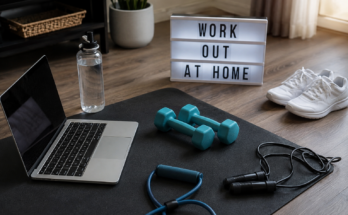
Starting a fitness routine can feel difficult when you are new to exercise. Many beginners think they need a gym membership, expensive equipment, or complicated workout plans to become fit. The truth is that you can build a simple and effective fitness routine at home with very little space and no special equipment. A full body home workout for beginners can help improve strength, flexibility, balance, and overall fitness while making exercise easier to include in your daily life.
A home workout is also a convenient option for people with busy schedules. You can exercise in your living room, bedroom, or any other safe space. The most important thing is to start slowly, learn the correct exercise technique, and remain consistent.
What Is a Full Body Home Workout?
A full body home workout is an exercise session that works several major muscle groups in one routine. Instead of focusing only on the arms, legs, or stomach, a full body workout includes movements that train the upper body, lower body, core, and cardiovascular system.
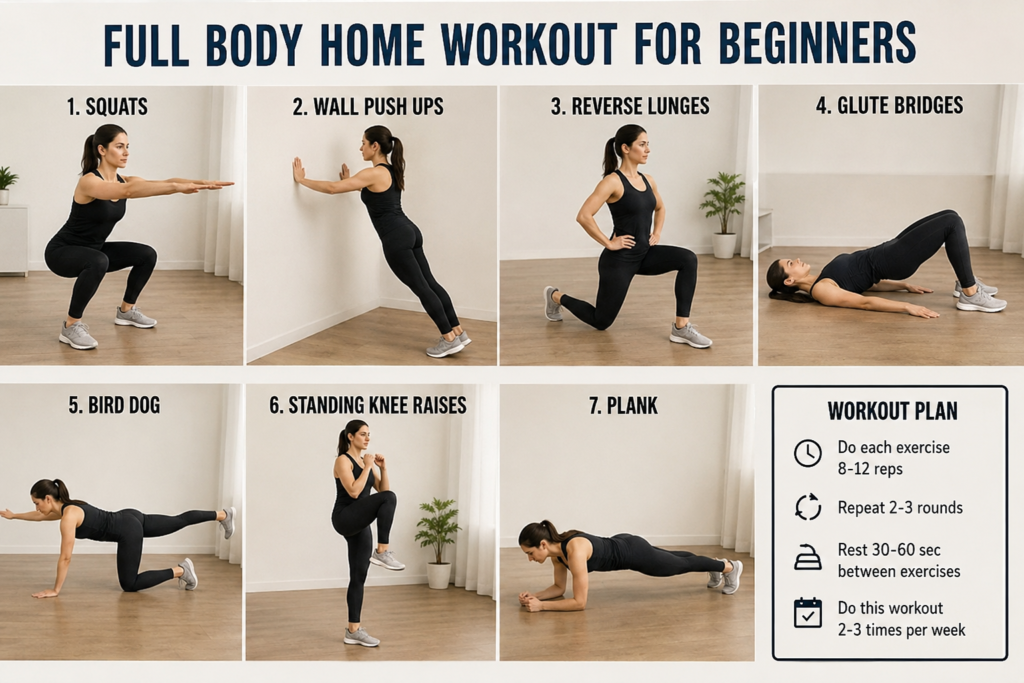
For beginners, this type of workout can be especially useful because it provides a balanced approach to fitness. Simple exercises such as squats, wall push ups, lunges, glute bridges, and planks can target different areas of the body without requiring gym equipment.
The goal is not to exercise as hard as possible. The goal is to develop good movement habits and gradually improve your strength and endurance.
Benefits of a Full Body Home Workout
There are many reasons why beginners can benefit from exercising at home. One of the biggest advantages is convenience. You do not have to travel to a gym or wait for equipment. You can simply choose a suitable time and begin your workout.
Regular exercise can also support stronger muscles and better physical fitness. Full body workouts encourage you to use different muscle groups together, which can improve coordination and movement.
Another benefit is that home workouts can be adapted to your fitness level. If an exercise feels too difficult, you can choose an easier version. As your strength improves, you can gradually increase the number of repetitions or the length of your workout.
Exercise may also help improve mood and energy levels. When you make physical activity part of your routine, it can become an enjoyable way to take a break from work, study, or other daily responsibilities.
Warm Up Before Your Workout
A warm up is an important part of a beginner workout. It prepares your body for movement and helps you transition from a resting state into exercise.
You can start with five to ten minutes of light movement. Walk around your room, move your arms gently, perform slow knee lifts, or march in place. You can also perform gentle shoulder circles and controlled leg movements.
The warm up should feel comfortable. You do not need to become exhausted before the main workout begins.
Simple Full Body Exercises for Beginners
Bodyweight Squats
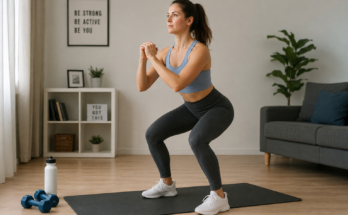
Bodyweight squats are one of the best beginner exercises for strengthening the lower body. They mainly work the thighs, hips, and glutes while also requiring your core to stay active.
Stand with your feet about shoulder width apart. Keep your chest comfortable and slowly bend your knees while moving your hips backward. Lower your body only as far as you can comfortably control. Then push through your feet and return to the standing position.
Beginners can start with 8 to 12 repetitions.
Wall Push Ups
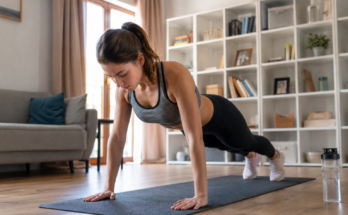
Traditional push ups can be challenging for beginners, so wall push ups are a useful starting point. They work the chest, shoulders, arms, and core.
Stand facing a wall and place your hands against it. Keep your body straight and slowly bend your elbows to bring your chest toward the wall. Push gently away from the wall until your arms are straight again.
Try 8 to 12 repetitions while maintaining controlled movement.
Reverse Lunges
Reverse lunges help strengthen the legs and improve balance. They can be easier to control than forward lunges for many beginners.
Stand upright with your feet comfortable apart. Step one foot backward and slowly lower your body while bending both knees. Push through the front foot to return to the starting position. Repeat with the other leg.
Start with 6 to 10 repetitions on each side.
Glute Bridges
Glute bridges are a simple exercise that targets the glutes and supports lower body strength.
Lie on your back with your knees bent and your feet flat on the floor. Keep your arms beside your body. Slowly lift your hips upward while squeezing your glutes. Pause briefly and lower your hips with control.
Beginners can perform 10 to 15 repetitions.
Bird Dog
The bird dog is useful for developing core stability and balance. Start on your hands and knees. Keep your back in a comfortable neutral position. Slowly extend one arm and the opposite leg. Hold the position briefly, then return to the starting position and switch sides.
Perform 6 to 10 repetitions on each side.
Standing Knee Raises
Standing knee raises can add a light cardiovascular element to your home workout. Stand upright and slowly raise one knee toward your waist. Lower it and repeat with the other leg.
Keep your movements controlled and avoid swinging your body. Continue for 30 to 60 seconds.
Plank
A plank is a popular core exercise that can help strengthen the muscles around your stomach and torso.
Place your hands or forearms on the floor and extend your legs behind you. Keep your body in a straight and comfortable position. Beginners can start with a short hold of 10 to 20 seconds.
If a full plank is difficult, you can place your knees on the floor while learning the movement.
A Beginner Full Body Workout Routine
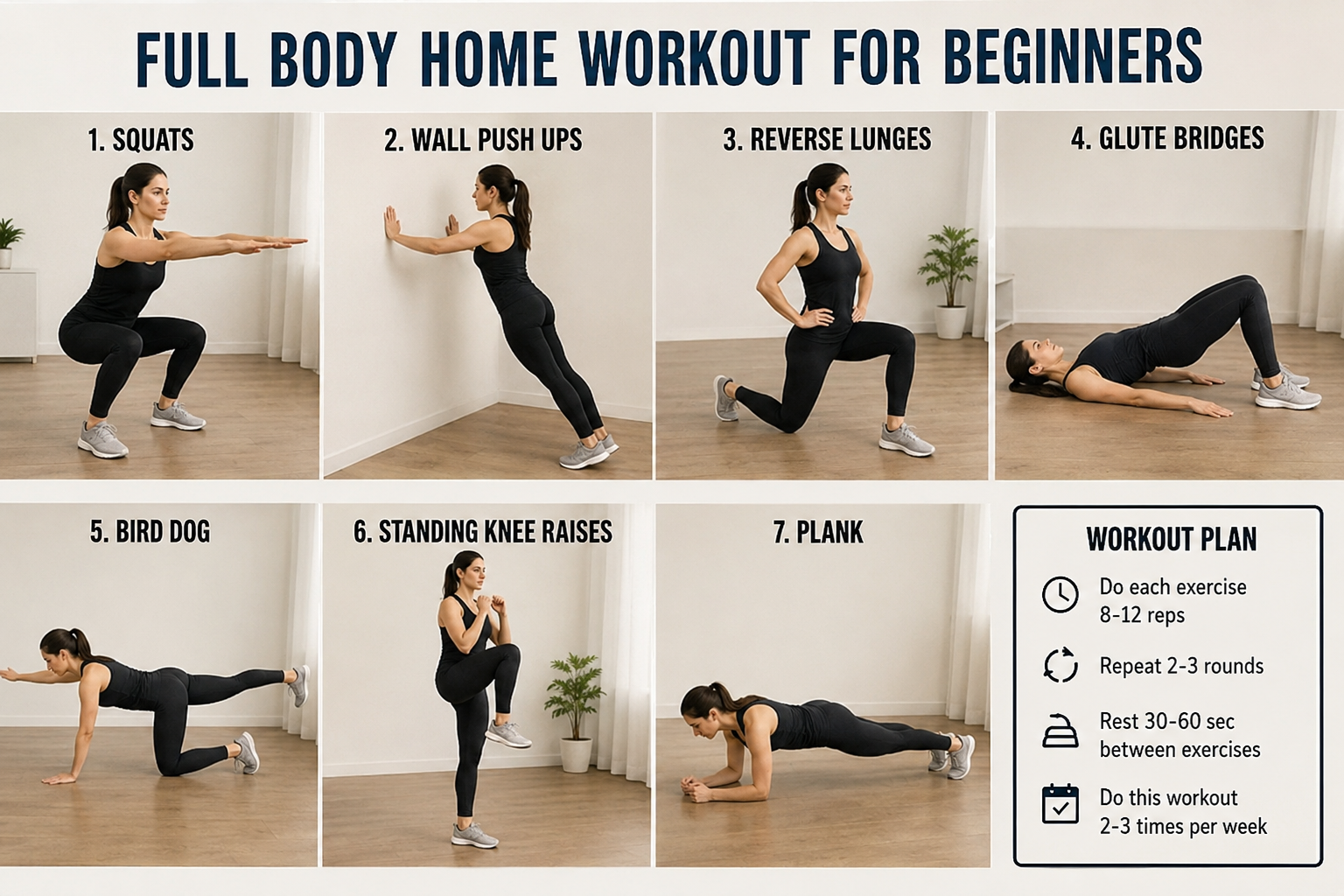
You can combine these exercises into a simple home workout. Start with a five minute warm up. Then perform bodyweight squats, wall push ups, reverse lunges, glute bridges, bird dogs, standing knee raises, and a short plank.
Perform about 8 to 12 repetitions for most strength exercises. For standing knee raises, exercise for around 30 to 60 seconds. Hold the plank for 10 to 20 seconds.
Rest for about 30 to 60 seconds between exercises if needed. Beginners do not need to complete many rounds. One round may be enough during the first few sessions. As your fitness improves, you can gradually work toward two or three rounds.
How Often Should Beginners Exercise?
Beginners should focus on consistency rather than doing long workouts every day. A full body home workout two or three times per week can be a reasonable starting point for many healthy adults.
You can also include light activities on other days. Walking, gentle stretching, or simple mobility exercises can help you remain active without making every day a hard workout.
Rest is also important. Your body needs time to recover after exercise, especially when you are beginning a new routine.
Tips for Getting Better Results
The quality of your exercise is more important than rushing through many repetitions. Focus on controlled movements and proper form. If you cannot maintain good technique, reduce the number of repetitions or choose an easier variation.
Keep your workout space clear and make sure the floor is stable. Wear comfortable clothing and supportive footwear when appropriate.
Drinking enough water and eating a balanced diet can also support an active lifestyle. Sleep is another important part of recovery because your body needs adequate rest to adapt to exercise.
Try to create a regular exercise schedule. Choosing a specific time of day can make it easier to turn exercise into a habit.
Common Mistakes Beginners Should Avoid
One common mistake is trying to do too much too quickly. Starting with a difficult workout can leave you extremely tired and may make it harder to continue exercising.
Another mistake is ignoring proper form. Performing an exercise incorrectly can reduce its effectiveness and may increase the chance of discomfort or injury.
Beginners should also avoid comparing their progress with other people. Everyone starts at a different fitness level. Focus on improving your own strength, movement, and consistency.
Do not forget rest days. More exercise is not always better. A balanced routine includes exercise, recovery, sleep, and healthy daily habits.
Listen to Your Body
Exercise should challenge you, but it should not cause sharp or severe pain. Normal muscle tiredness can happen during a workout, especially when you are new to exercise. However, stop an exercise if you experience unusual pain, dizziness, chest discomfort, or difficulty breathing.
If you have an existing health condition, an injury, or concerns about starting exercise, consider speaking with a qualified healthcare professional before beginning a new workout routine.
Conclusion
A full body home workout for beginners can be a simple and practical way to start becoming more active. You do not need expensive equipment or a complicated gym program. Basic exercises such as squats, wall push ups, lunges, glute bridges, bird dogs, knee raises, and planks can provide a balanced starting point.
The key is to begin at a comfortable level and gradually improve. Focus on proper form, regular exercise, enough recovery, and healthy daily habits. With patience and consistency, a simple home workout routine can become an important part of your lifestyle and help you build a stronger and healthier body.