Staying active does not always mean going to a gym or buying expensive fitness equipment. There are many easy exercises you can do at home that can help improve your strength, flexibility, balance, and overall fitness. Home workouts are simple, convenient, and suitable for people with different fitness levels. Whether you are a beginner or someone who wants to stay active during a busy day, you can create an effective exercise routine using only your body weight.
Regular physical activity can also support better energy, mood, sleep, and daily performance. The most important thing is to choose exercises that feel comfortable and make them part of your regular routine. You do not need to spend hours exercising. Even a short home workout can be useful when you perform the exercises correctly and stay consistent.
Why Home Exercise Is a Good Choice
One of the biggest benefits of exercising at home is convenience. You can work out at almost any time without traveling to a gym. This can make it easier to maintain a regular exercise routine.
Home workouts can also save money because many exercises do not require equipment. Your body weight can provide enough resistance for movements such as squats, lunges, push ups, and planks.
Another advantage is privacy. Some beginners may feel uncomfortable exercising around other people. Working out at home gives you the opportunity to learn movements at your own pace and gradually become more confident.
Walking Around Your Home
Walking is one of the easiest exercises for beginners. You can walk around your home, hallway, garden, or nearby safe area. If you have limited space, simply walk in place.
Try moving your arms naturally while walking and maintain a comfortable pace. As your fitness improves, you can increase the speed or duration.
Walking regularly can help keep your body active and may support cardiovascular fitness. It is also an easy way to reduce the amount of time you spend sitting during the day.
Bodyweight Squats
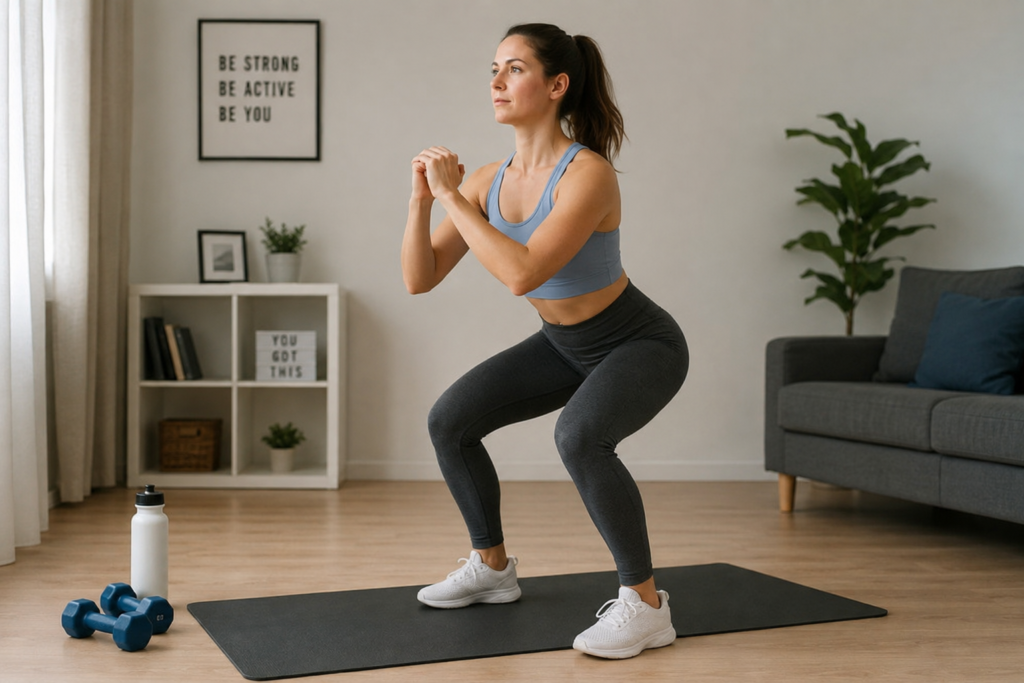
Squats are one of the best easy exercises you can do at home because they work several lower body muscles. They mainly target the legs and hips while also requiring your core to stay active.
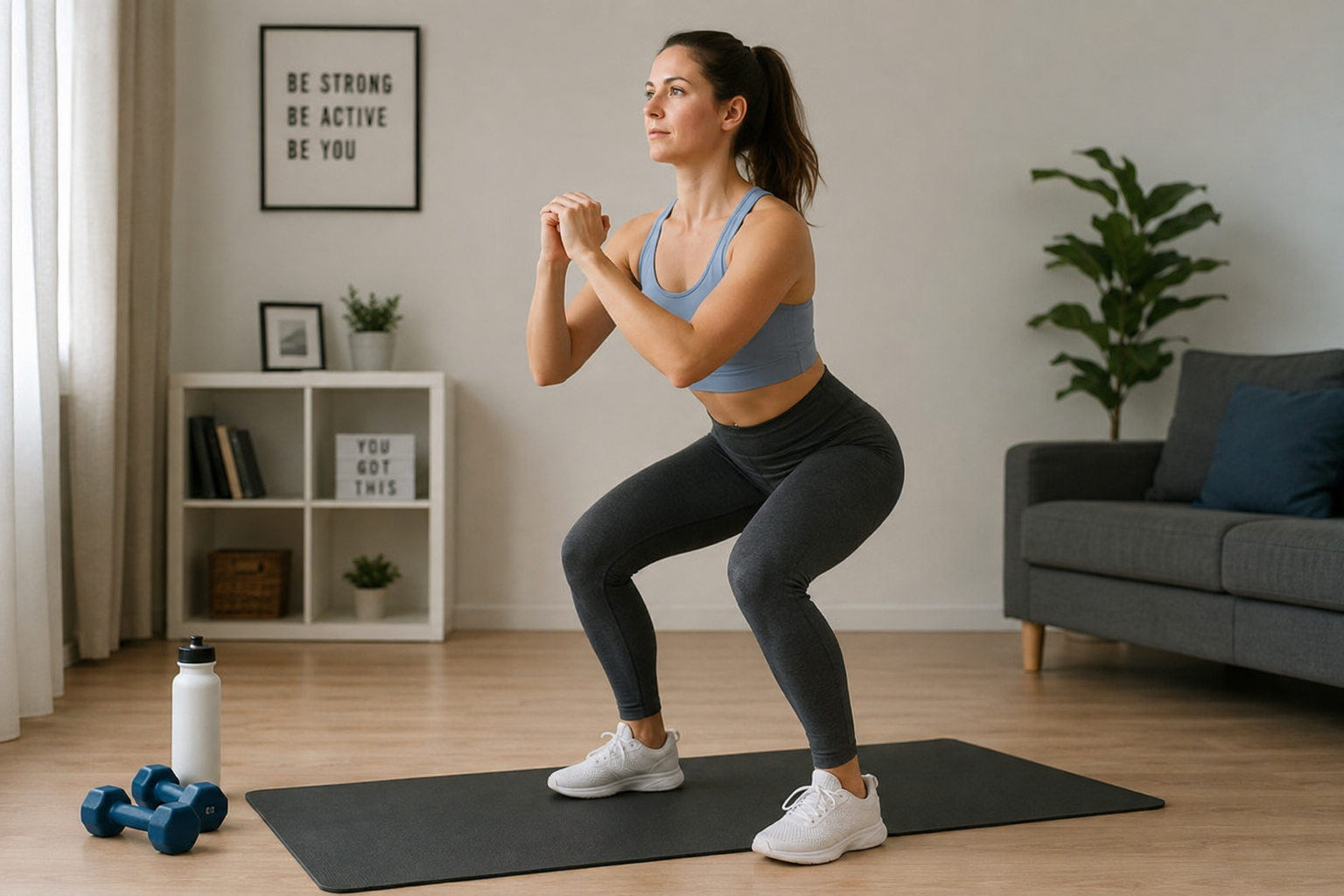
Stand with your feet about shoulder width apart. Keep your chest comfortable and slowly bend your knees while moving your hips backward. Lower your body as far as feels comfortable, then push through your feet to return to the starting position.
Beginners can start with 8 to 10 repetitions and gradually increase the number as they become stronger. Focus on controlled movement instead of trying to complete repetitions quickly.
Wall Push Ups
Traditional push ups can be challenging for beginners, but wall push ups provide an easier alternative. They can help you build upper body strength while allowing you to control the amount of resistance.
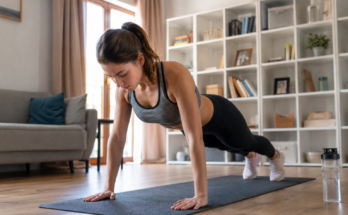
Stand facing a wall and place your hands against it at about chest level. Keep your body straight and slowly bend your elbows to bring your upper body toward the wall. Then push yourself back to the starting position.
Try 10 repetitions at first. Over time, you can move to a stronger variation such as push ups against a table or another stable surface.
Glute Bridges
Glute bridges are simple exercises that focus on the hips and lower body. They can be performed on a comfortable floor or exercise mat.
Lie on your back with your knees bent and your feet flat on the floor. Keep your arms beside your body. Slowly lift your hips while keeping your feet and shoulders in contact with the floor. Pause briefly and lower your hips with control.
Start with 10 to 15 repetitions. Avoid rushing through the movement and concentrate on maintaining good control.
Lunges
Lunges are another useful home exercise for strengthening the legs. They can also help improve balance and coordination.
Stand upright with your feet comfortable apart. Step forward with one foot and slowly lower your body by bending both knees. Push through the front foot to return to the starting position, then repeat on the other side.
If regular lunges feel difficult, hold onto a sturdy chair for support. Start with a small number of repetitions and increase gradually.
Standing Knee Raises
Standing knee raises are easy to perform and require very little space. They can be useful as part of a warm up or simple home cardio routine.
Stand upright and slowly lift one knee toward your waist. Lower it and repeat with the opposite leg. Continue alternating between both sides.
To make the exercise more challenging, increase your pace while maintaining control. Keep your upper body stable and avoid using sudden movements.
Plank
The plank is a popular exercise for strengthening the core. Beginners can start with a short hold instead of trying to stay in the position for a long time.
Place your hands or forearms on the floor and extend your legs behind you. Keep your body in a straight line and tighten your stomach muscles gently. Hold the position for a comfortable amount of time.
If a full plank is too difficult, place your knees on the floor. The goal is to build strength gradually while maintaining proper form.
Step Ups
If you have a strong and stable step or low platform, step ups can provide a simple lower body workout. Make sure the surface is secure before starting.
Place one foot on the step and carefully bring the other foot up. Step down slowly and repeat on the opposite side.
Do not use unstable furniture for this exercise. Safety should always come before increasing the difficulty of a workout.
Calf Raises
Calf raises are very simple and can be performed almost anywhere. Stand upright with your feet flat on the floor. Slowly raise your heels so that you are standing on your toes, then lower your heels back down.
You can hold a wall or sturdy chair for balance. Start with 10 to 15 repetitions and increase gradually.
This exercise is especially convenient because you can perform it while taking short activity breaks during the day.
Simple Stretching Exercises
Stretching can help improve flexibility and make your body feel more comfortable after sitting for long periods. Simple stretches can include gentle shoulder movements, neck movements, arm stretches, hamstring stretches, and calf stretches.
Move slowly and avoid bouncing. You should feel a gentle stretch rather than sharp pain. Holding each comfortable stretch for several seconds can be a good starting point.
Stretching can also be included at the end of your home workout when your muscles are warm.
A Simple Home Workout Routine
You do not need a complicated plan to stay active. A beginner home workout could include a short warm up followed by several basic exercises.
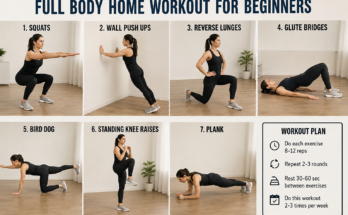
Start with five minutes of gentle walking in place. Then perform 10 squats, 8 wall push ups, 10 glute bridges, 8 lunges on each side, 10 standing knee raises on each side, and a short plank hold.
Rest between exercises whenever necessary. Beginners should focus on learning proper movement and building consistency instead of trying to exercise intensely from the first day.
As your fitness improves, you can gradually increase repetitions or add another round.
Tips for Exercising Safely at Home
Safety is important when exercising without professional supervision. Start every workout with gentle movements to prepare your body. Wear comfortable clothing and choose footwear that provides suitable support when needed.
Keep enough space around you so that you can move freely. Remove objects that could cause you to trip. Use only strong and stable furniture if an exercise requires support.
Listen to your body during exercise. Mild muscle effort is normal, but stop if you experience sharp pain, severe dizziness, unusual breathing problems, or another concerning symptom. If you have specific health concerns or have been inactive for a long time, consider speaking with a qualified health professional before starting a new exercise program.
How to Stay Consistent With Home Workouts
Consistency is more important than making every workout difficult. Choose a realistic time for exercise and try to make it part of your daily routine.
You can begin with 15 to 20 minutes and increase the duration gradually. Some people prefer exercising in the morning, while others find it easier after work or in the evening.
Tracking your workouts can also help you stay motivated. Write down the exercises you complete and notice small improvements over time. You may find that exercises that once felt difficult become easier after several weeks of regular practice.
It is also helpful to choose exercises that you enjoy. A workout does not need to be complicated to be effective. Simple movements performed regularly can become an important part of a healthy lifestyle.
Final Thoughts
Easy exercises you can do at home are a practical way to stay active without needing a gym or expensive equipment. Exercises such as squats, wall push ups, glute bridges, lunges, walking, knee raises, planks, and stretching can create a simple and useful home workout routine.
The key is to begin at a comfortable level and improve gradually. Focus on proper form, listen to your body, and make regular physical activity part of your lifestyle. With patience and consistency, even a simple home exercise routine can help you become stronger, more flexible, and more active in everyday life.