Staying active does not always require a gym membership, expensive machines, or a collection of workout equipment. With the right approach, you can enjoy an effective home workout using only your body weight and a little space. Home workouts are simple, flexible, and suitable for beginners as well as people who already exercise regularly.
The best home workout tips without equipment focus on consistency, proper form, balanced exercises, and gradual improvement. Whether your goal is to lose weight, build strength, improve fitness, or stay active during a busy schedule, bodyweight exercises can become an important part of your daily routine.
Why Home Workouts Are Useful
Home workouts offer many advantages. You can exercise whenever you have free time without traveling to a gym. This can make it easier to maintain a regular exercise routine. You also have complete control over your workout environment.
Another benefit is that bodyweight exercises can work several muscle groups at the same time. Exercises such as squats, push ups, lunges, and planks can improve strength, balance, coordination, and overall fitness.
Home workouts can also be a good choice for people who are just starting exercise. You can begin with simple movements and slowly increase the number of repetitions as your fitness improves.
Start With a Simple Warm Up
One of the most important home workout tips is to warm up before exercising. A warm up prepares your body for movement and helps you transition from rest to exercise.
You can start with five to ten minutes of light activity. Marching in place, walking around the room, arm circles, gentle leg movements, and light jogging can help raise your body temperature.
A proper warm up should feel comfortable rather than exhausting. The purpose is to prepare your muscles and joints for the exercises that follow.
Bodyweight Squats
Squats are one of the best home exercises because they work the legs and hips while also engaging the core.
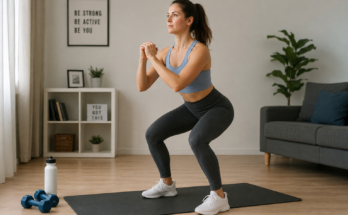
To perform a basic squat, stand with your feet around shoulder width apart. Keep your chest up and slowly bend your knees while moving your hips backward. Lower yourself as far as feels comfortable while keeping your feet stable. Then push through your feet to return to the starting position.
Beginners can start with two or three sets of ten repetitions. As you become stronger, you can increase the repetitions or perform the movement more slowly.
Push Ups for Upper Body Strength
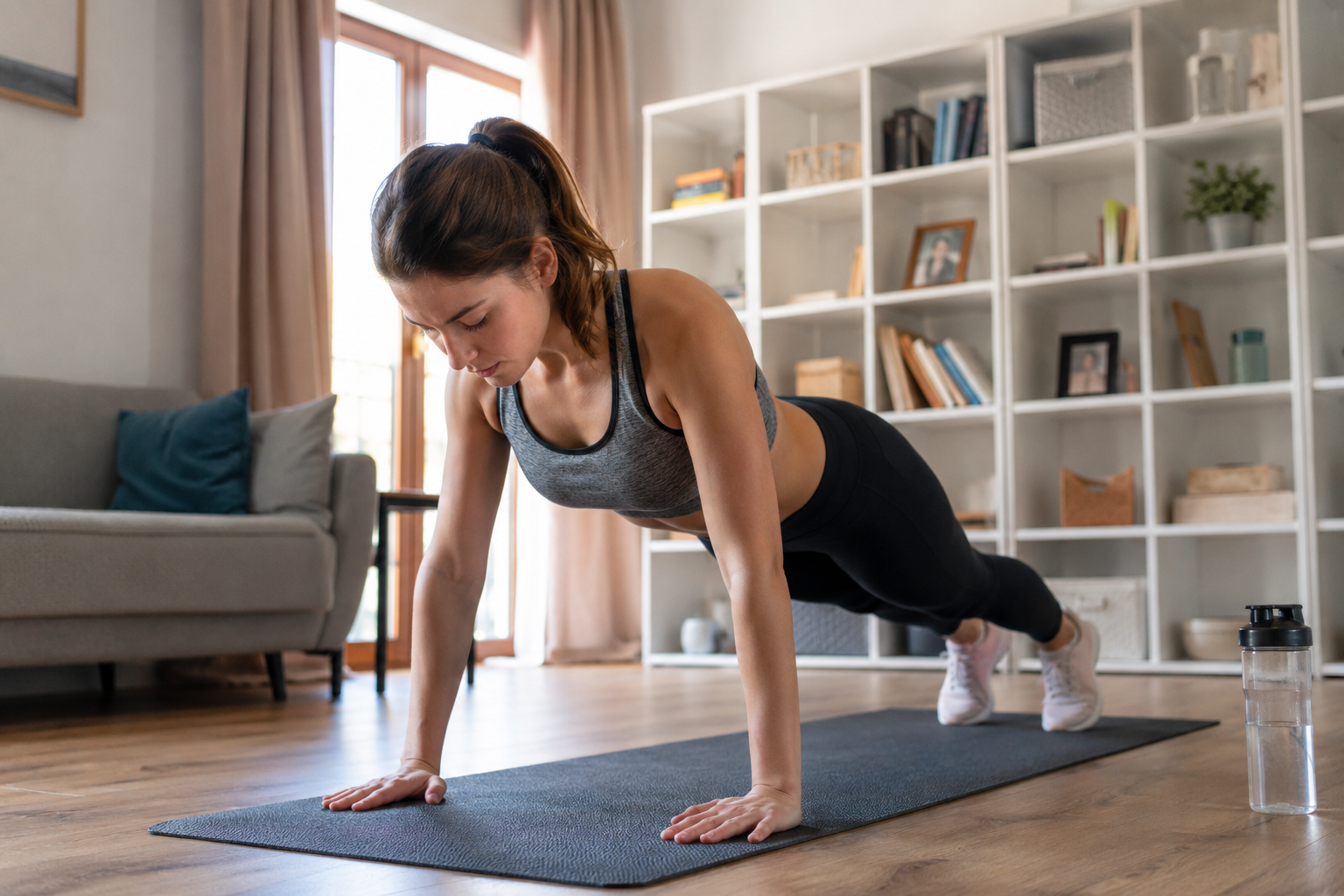
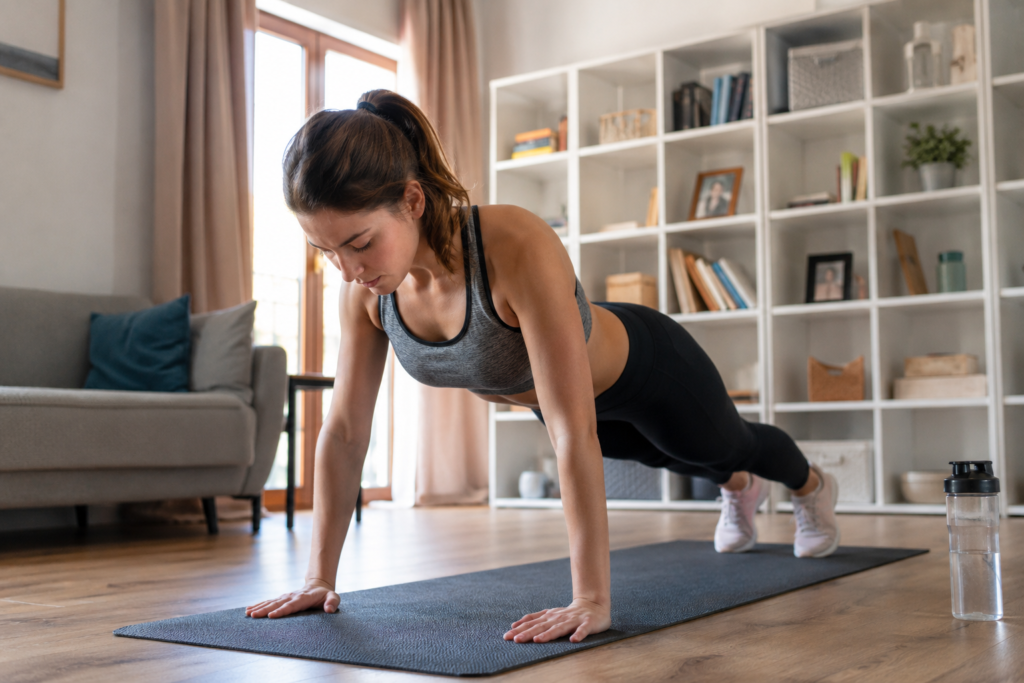
Push ups are an excellent bodyweight exercise for the chest, shoulders, arms, and core. They can be adjusted according to your fitness level.
If standard push ups are difficult, start with knee push ups or perform push ups against a strong wall. As your strength improves, you can gradually move toward regular push ups.
Keep your body controlled during the movement. Avoid dropping your hips or rushing through the repetitions. Good form is more important than completing a large number of repetitions.
Lunges for Strong Legs
Lunges are another useful exercise for home workouts without equipment. They can help strengthen the legs and improve balance.
Stand upright and take one step forward. Bend both knees while lowering your body in a controlled manner. Push through the front foot to return to the starting position and repeat on the other side.
Start with a comfortable number of repetitions. If balance is challenging, perform the movement slowly or hold onto a stable surface for support.
Planks for Core Strength
A strong core can support better movement and posture. Planks are a simple exercise that can be performed almost anywhere.
Place your forearms on the floor and extend your legs behind you. Keep your body in a straight line and tighten your abdominal muscles. Hold the position for a comfortable amount of time while breathing normally.
Beginners can start with short holds of ten to twenty seconds. Over time, you can gradually increase the duration.
Glute Bridges
Glute bridges are an easy exercise for working the hips, glutes, and lower body.
Lie on your back with your knees bent and feet flat on the floor. Keep your arms beside your body. Slowly lift your hips toward the ceiling while squeezing your glute muscles. Pause briefly and then lower your hips in a controlled way.
This exercise is useful for people who spend many hours sitting because it encourages movement in the hips and activates the glute muscles.
Mountain Climbers
If you want to add more movement to your home workout, mountain climbers can be a useful option. They combine body movement with cardiovascular activity.
Start in a high plank position. Bring one knee toward your chest and then return it while bringing the opposite knee forward. Continue alternating at a controlled pace.
Beginners should focus on maintaining good form rather than moving as quickly as possible. You can perform the exercise for a short period and gradually increase the duration.
Make Walking Part of Your Routine
Exercise at home does not have to mean staying in one room all day. Walking is one of the simplest ways to increase daily physical activity.
You can walk around your home, use stairs when appropriate, or take a walk outside if the environment is safe and comfortable. Regular walking can complement strength exercises and help you stay active throughout the day.
Try taking short movement breaks if you spend long periods sitting. Even a few minutes of movement can help break up long periods of inactivity.
Create a Simple Workout Routine
A good home workout routine does not need to be complicated. You can combine several bodyweight exercises into one session.
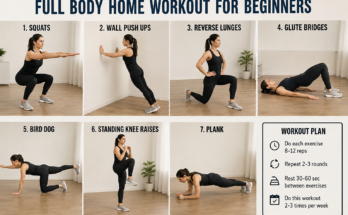
For example, a beginner routine could include squats, push ups, lunges, glute bridges, and planks. Perform each exercise at a comfortable level and take rest periods when needed.
You could begin with two rounds and gradually increase the number of rounds as your fitness improves. The goal should be steady progress rather than trying to complete an extremely difficult workout on the first day.
Focus on Proper Exercise Form
Proper form is one of the most important parts of any workout. Performing an exercise incorrectly can reduce its effectiveness and may increase the chance of discomfort or injury.
Move slowly enough to control each repetition. Keep your body aligned and avoid using unnecessary momentum. If you are unsure about an exercise, start with an easier variation and learn the movement before making it more difficult.
Quality repetitions are usually more useful than rushing through a large number of repetitions.
Increase Workout Intensity Gradually
Your body needs time to adapt to exercise. Once a workout becomes comfortable, you can gradually make it more challenging.
You can increase repetitions, add another set, reduce rest periods slightly, or perform an exercise with greater control. You can also choose a more challenging variation of the same movement.
For example, someone who can comfortably perform regular squats might eventually try slower squats or split squats. Progress should be gradual and appropriate for your current fitness level.
Do Not Forget Rest and Recovery
Rest is an important part of fitness. Your body needs time to recover after exercise, especially when you are performing strength focused workouts.
Avoid training the same muscles intensely every day. Include easier activity and rest days in your routine. Getting enough sleep, eating balanced meals, and drinking enough fluids can also support recovery.
If an exercise causes sharp or unusual pain, stop and consider getting advice from a qualified health professional.
Stay Consistent With Your Routine
One of the biggest secrets to successful home workouts is consistency. A short workout that you perform regularly can be more useful than an intense workout that you only do occasionally.
Choose a realistic schedule that fits your lifestyle. Some people may prefer exercising in the morning, while others find it easier to work out in the evening.
Start with manageable goals. Even fifteen to twenty minutes of exercise can be a useful starting point. As the habit becomes stronger, you can increase your workout time.
Keep Your Workout Interesting
Doing the same exercises every day can become boring. You can keep your home workout routine interesting by changing exercises and workout formats.
For example, one day can focus more on lower body exercises, while another day can include upper body and core movements. You can also include dancing, walking, stretching, or other enjoyable physical activities.
The best home workout routine is one that you enjoy enough to continue.
Conclusion
The best home workout tips without equipment are simple to follow and can fit into almost any lifestyle. Bodyweight exercises such as squats, push ups, lunges, planks, and glute bridges can help improve strength and fitness without requiring expensive equipment.
Start with a proper warm up, focus on good exercise form, choose realistic goals, and increase the difficulty gradually. Most importantly, remain consistent and give your body enough time to recover.
You do not need a gym to become more active. With a small amount of space, a regular routine, and commitment, you can create an effective home workout without equipment and make physical activity a natural part of your everyday life.