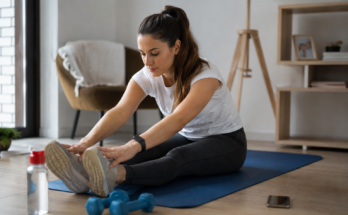
Starting a fitness routine does not always mean joining a gym or buying expensive equipment. Simple home exercises for beginners can be an excellent way to become more active, improve strength, support healthy weight management, and build better daily habits. Whether you are completely new to exercise or returning after a long break, working out at home gives you a comfortable place to begin.
The best part about beginner exercises at home is that most movements require little or no equipment. You can use your body weight and a small amount of open space to complete an effective workout. With consistency and patience, simple home workouts can become an important part of a healthy lifestyle.
Why Home Exercises Are Good for Beginners
Home workouts are convenient because you do not need to travel to a gym. You can exercise in your bedroom, living room, backyard, or any other safe area with enough space to move.
For beginners, exercising at home can also feel less stressful. Some people feel uncomfortable when they start exercising around experienced gym members. A home workout allows you to learn basic movements at your own pace.
Regular exercise can help improve muscle strength, flexibility, balance, stamina, and overall fitness. It can also make everyday activities such as walking, climbing stairs, carrying groceries, and playing with children easier.
The key is to start slowly. You do not need to perform difficult exercises during your first workout. Simple movements performed correctly can provide a strong foundation for future fitness progress.
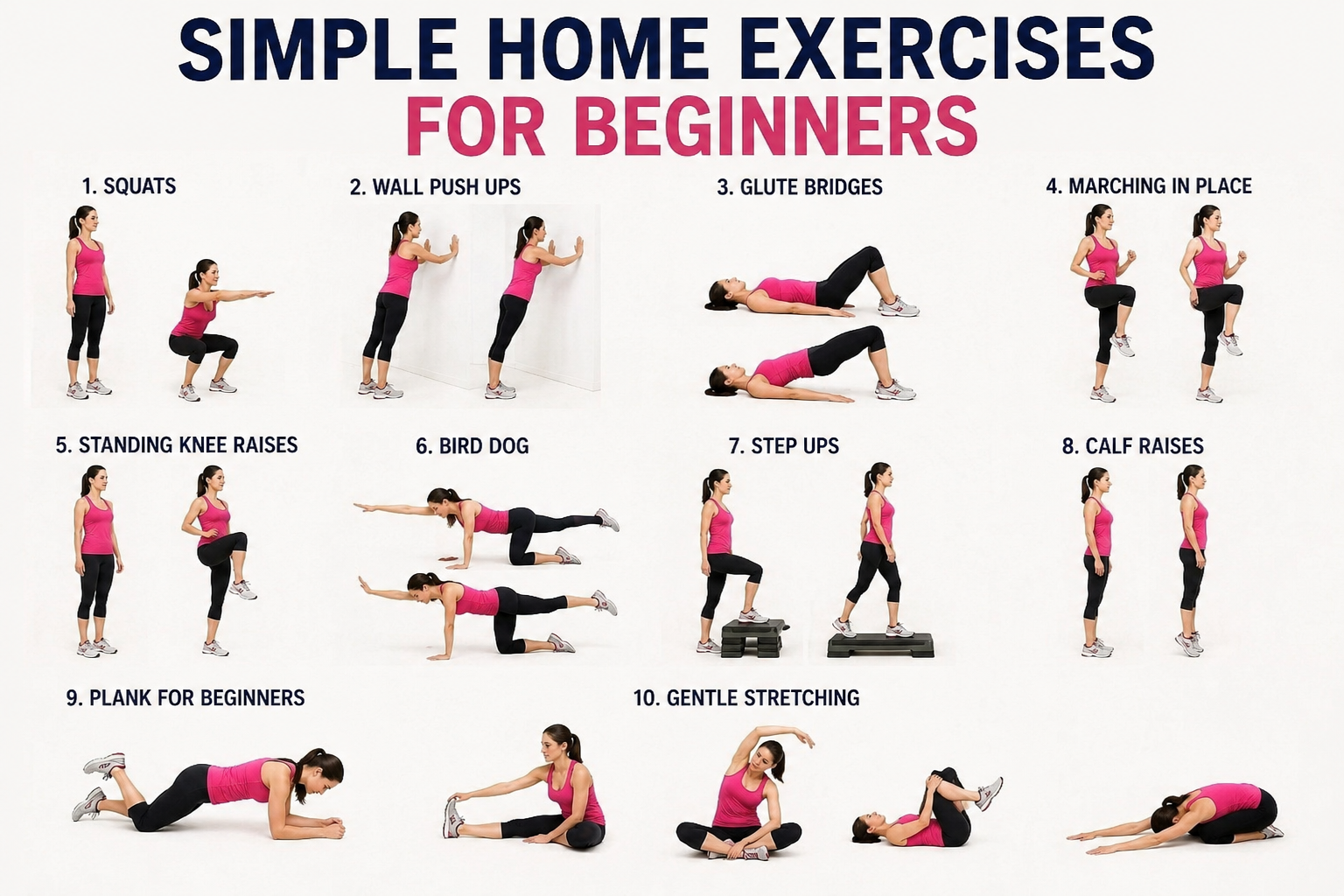
1. Bodyweight Squats
Bodyweight squats are one of the best simple home exercises for beginners. They mainly work the legs and hips while also engaging the core.
Stand with your feet about shoulder width apart. Keep your chest lifted and your back comfortable. Slowly bend your knees and push your hips backward as if you are going to sit on a chair. Lower yourself as far as you can comfortably manage, then push through your feet to return to the starting position.
Beginners can start with 8 to 10 repetitions. As strength improves, you can gradually increase the number of repetitions.
If regular squats feel difficult, use a chair behind you for support. Focus on controlled movement instead of trying to move quickly.
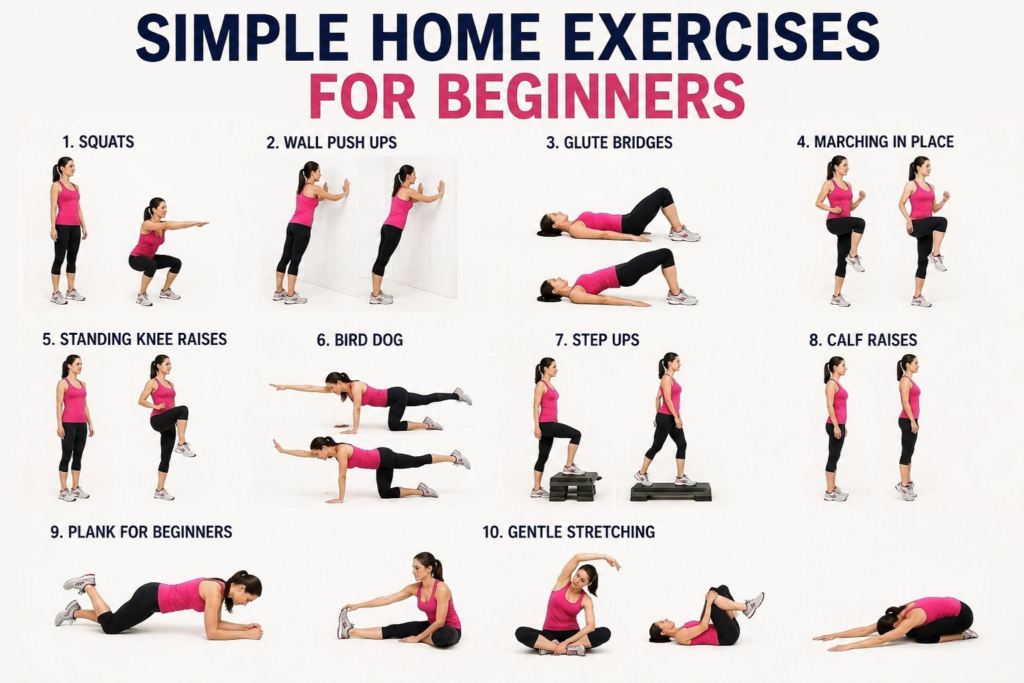
2. Wall Push Ups
Traditional push ups can be challenging for people who are new to exercise. Wall push ups provide an easier alternative while helping beginners develop upper body strength.
Stand facing a wall and place your hands against it at about chest height. Keep your body straight and slowly bend your elbows to bring your chest closer to the wall. Push yourself back to the starting position.
Try 8 to 12 repetitions. As you become stronger, you can progress to incline push ups using a stable table or countertop and eventually work toward regular push ups.
3. Glute Bridges
Glute bridges are simple exercises that can strengthen the hips, glutes, and lower body. They can be performed on the floor without equipment.
Lie on your back with your knees bent and your feet flat on the floor. Keep your arms beside your body. Tighten your abdominal muscles gently and lift your hips toward the ceiling. Pause for a moment and then slowly lower your hips.
Start with 10 repetitions and focus on controlled movement. Avoid using fast movements to lift your body.
4. Marching in Place
If you want an easy beginner cardio exercise, marching in place is a good option. It requires very little space and can help increase your heart rate.
Stand upright and slowly lift one knee, then the other. Move your arms naturally while maintaining a comfortable rhythm. Beginners can march for 30 seconds and gradually increase the duration.
You can use marching in place as a warm up before strength exercises or as part of a short home cardio workout.
5. Standing Knee Raises
Standing knee raises are another beginner friendly movement that can improve balance and strengthen the muscles around the hips and abdomen.
Stand upright and hold a wall or sturdy chair if you need support. Lift one knee toward your waist, lower it, and then repeat with the other leg.
Perform 8 to 10 repetitions on each side. Keep your movements slow and controlled. As your balance improves, you may be able to perform the exercise without holding onto anything.
6. Bird Dog
The bird dog exercise is useful for developing core stability and improving body control.
Begin on your hands and knees. Keep your back in a comfortable neutral position. Slowly extend one arm forward while extending the opposite leg backward. Hold the position briefly, then return to the starting position and switch sides.
Beginners can perform 6 to 8 repetitions on each side. Move slowly and avoid twisting your body.
7. Step Ups
Step ups can be included in a beginner home workout if you have a stable and secure step. This exercise works the legs and can also increase your heart rate.
Place one foot on a strong step and carefully bring the other foot up. Step back down and repeat on the opposite side.
Safety is very important. Never use an unstable chair or slippery surface. Start with a low step and hold a wall or railing if necessary.
8. Calf Raises
Calf raises are simple but useful for strengthening the lower legs.
Stand with your feet comfortably apart. Hold a wall or sturdy surface for balance if needed. Slowly raise your heels so that you are standing on your toes. Pause briefly and then lower your heels back to the floor.
Start with 10 to 15 repetitions. Keep your movements slow and controlled.
9. Plank for Beginners
Planks can strengthen the core, shoulders, and other muscles that help support the body. However, beginners do not need to hold a plank for a long time.
Start with a modified plank by keeping your knees on the floor and your hands or forearms supported. Keep your body aligned and gently tighten your stomach muscles.
Try holding the position for 10 to 20 seconds. Gradually increase the time as your strength improves.
The goal is good form rather than holding the position for as long as possible.
10. Gentle Stretching
Stretching should be an important part of a beginner fitness routine. Gentle stretches can help you relax after exercise and improve flexibility over time.
You can stretch your legs, shoulders, arms, back, and hips after your workout. Move slowly and avoid forcing any stretch. You should feel gentle tension rather than sharp pain.
Holding each comfortable stretch for around 15 to 30 seconds can be a simple way to finish your workout.
Simple Beginner Home Workout Routine
A beginner does not need to perform every exercise in one session. A simple routine can include a few basic movements.
Start with 3 to 5 minutes of gentle marching or walking around your home. Then perform bodyweight squats, wall push ups, glute bridges, standing knee raises, bird dogs, and calf raises.
You can begin with one set of 8 to 12 repetitions for most exercises. Rest whenever you need to. After finishing the exercises, spend a few minutes doing gentle stretching.
As your fitness improves, you can gradually add more repetitions or another set. There is no need to rush.
How Often Should Beginners Exercise at Home?
Beginners should focus on consistency rather than doing very long workouts. You can start with around 15 to 20 minutes of exercise several days each week.
For example, you might exercise on Monday, Wednesday, and Friday while using the other days for rest or light movement. Walking can also be added to your routine if you enjoy it.
Your body needs time to adapt. Rest is an important part of fitness because it gives your muscles time to recover.
Tips for Safe Home Workouts
Safety should always come first when starting a new exercise routine. Make sure the floor is clear of objects that could cause you to trip. Wear comfortable clothing and supportive footwear when appropriate.
Start every workout with a gentle warm up. Learn the correct movement before increasing repetitions. Drink enough water and take breaks when needed.
Do not ignore pain. Normal exercise can cause effort and tiredness, but sharp or unusual pain is a reason to stop and reassess the movement. If you have an existing health concern or have been inactive for a long time, consider speaking with a qualified health professional before beginning a new exercise program.
How to Stay Consistent With Home Exercise
The biggest challenge for many beginners is not finding exercises but staying consistent. One useful approach is to create a simple exercise schedule.
Choose a time of day when you are usually free. Keep your workout short enough that it does not feel overwhelming. You can also prepare your workout clothes in advance so that starting becomes easier.
Do not worry about being perfect. Missing one workout does not mean you have failed. Simply return to your routine the next day.
Tracking your workouts can also help you see your progress. Write down the exercises you complete and how many repetitions you perform. Over time, you may notice that movements that once felt difficult become easier.
Final Thoughts
Simple home exercises for beginners can provide an effective starting point for improving fitness without expensive equipment or a gym membership. Exercises such as squats, wall push ups, glute bridges, marching in place, knee raises, bird dogs, calf raises, and beginner planks can help develop strength, balance, flexibility, and stamina.
The most important thing is to begin at a comfortable level and progress gradually. Focus on proper technique, listen to your body, and make exercise a regular part of your lifestyle.
You do not need a complicated workout plan to become more active. A few simple home exercises, performed consistently, can help you build a strong foundation for a healthier and more active future.