
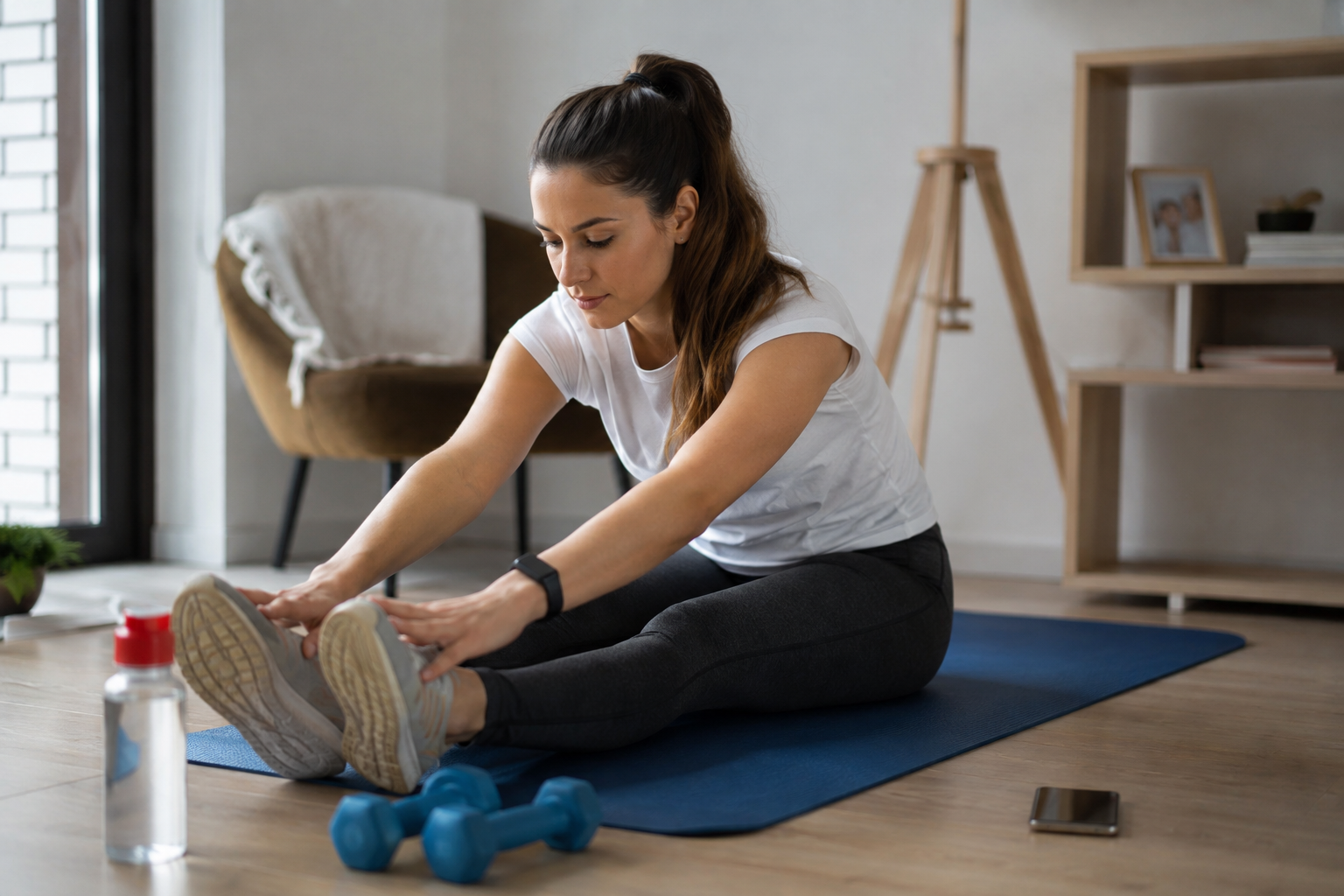
Starting an exercise routine can feel exciting, but many beginners are not sure how much exercise they actually need each day. Some people believe they need to work out for an hour or more to see results, while others may exercise too little to make meaningful progress. The good news is that beginners do not need to spend several hours in the gym. A simple and consistent exercise routine can help improve fitness, energy, strength, and overall health.
For most beginners, exercising for about 20 to 30 minutes a day is a practical starting point. As the body becomes stronger and more comfortable with physical activity, exercise time can gradually increase. The most important thing is to focus on consistency rather than trying to do too much at once.
Why Exercise Duration Matters for Beginners
Exercise duration matters because the body needs enough physical activity to become stronger and healthier. However, doing too much exercise when you are just starting can cause tiredness, muscle soreness, or even injury.
Beginners should give their bodies time to adjust. A short workout performed regularly can be more beneficial than a long workout that leaves you exhausted and makes you avoid exercise for several days.
Regular physical activity can support heart health, muscle strength, flexibility, balance, and mental well being. It can also help people maintain a healthy body weight and improve daily energy levels.
The goal of beginner exercise should not be perfection. The goal should be creating a routine that is comfortable enough to continue.
How Long Should Beginners Exercise Each Day?
For someone who is new to exercise, 20 to 30 minutes of physical activity per day is a good starting point. This does not mean that every minute needs to be intense. A beginner workout can include a warm up, simple exercises, and a cool down.
For example, a 30 minute beginner workout may look like this:
Five minutes of gentle walking and warm up exercises
Fifteen to twenty minutes of moderate exercise
Five minutes of slow movement and stretching
If 30 minutes feels difficult at first, beginners can start with 10 to 15 minutes and slowly increase the duration. Even a short walk is better than doing nothing.
The important thing is to listen to your body and increase exercise time gradually.
How Much Exercise Do Beginners Need Each Week?
Daily exercise is useful, but beginners do not necessarily need a hard workout every single day. A balanced weekly routine can include different types of physical activity.
Many health recommendations encourage adults to work toward at least 150 minutes of moderate aerobic activity each week. This can include activities such as brisk walking, cycling, swimming, or dancing.
For a beginner, reaching this amount may take time. There is no need to achieve the full target immediately. Starting with smaller amounts and gradually increasing activity can make the process easier.
A beginner could start with 20 minutes of exercise five days a week. Over time, the person can increase the duration or intensity as fitness improves.

Start With Walking
Walking is one of the easiest exercises for beginners. It does not require expensive equipment or a gym membership, and most people can easily include walking in their daily routine.
A beginner can start with a 10 to 20 minute walk at a comfortable pace. After a few weeks, the walking time can be increased to 30 minutes or more.
Brisk walking can provide a stronger workout because it increases the heart rate while still being relatively easy to control. Beginners should choose a pace that feels challenging but manageable.
Walking can also be a useful recovery activity on days when a person does not want to perform a harder workout.
Strength Training for Beginners
Exercise for beginners should not focus only on cardio. Strength training is also important because stronger muscles can make everyday activities easier.
Beginners can start with simple bodyweight exercises such as squats, wall push ups, lunges, glute bridges, and gentle core exercises.
A beginner strength workout may take only 15 to 25 minutes. It is usually better to focus on proper exercise technique rather than completing a large number of repetitions.
Strength training can be performed two or more days each week, depending on the person’s fitness level and recovery.
Beginners should allow enough recovery between challenging strength workouts. Muscles need time to recover and adapt after exercise.
Is 30 Minutes of Exercise Enough?
Yes, 30 minutes of exercise can be enough for a beginner, especially when the workout is performed consistently.
A 30 minute workout can include walking, cycling, bodyweight exercises, stretching, or a combination of different activities. The benefits of exercise are influenced not only by workout duration but also by frequency, intensity, exercise type, and consistency.
Someone who exercises for 30 minutes several times a week may make better long term progress than someone who performs a very long workout once in a while.
Beginners should therefore focus on building a habit instead of worrying about spending a specific number of hours exercising.
Can Beginners Exercise for One Hour?
Beginners can eventually work toward longer workouts if their bodies are ready. However, there is usually no need to start with one hour of exercise every day.
A long workout can be tiring for someone who has not exercised regularly. It may also create excessive muscle soreness and reduce motivation.
If a beginner enjoys longer workouts, they can gradually increase exercise time. For example, they can begin with 20 minutes, move to 30 minutes, and later reach 45 or 60 minutes when comfortable.
Increasing exercise gradually gives the body more time to adapt.
Importance of Warm Up and Cool Down
A proper warm up can prepare the body for exercise. Beginners can spend about five minutes walking slowly, moving their arms, or performing gentle dynamic movements before starting their main workout.
A cool down can help the body gradually return to a resting state. Beginners can finish their workout with a few minutes of slow walking and gentle stretching.
Warm ups and cool downs do not need to be complicated. The goal is simply to prepare the body before exercise and allow it to relax afterward.
How Beginners Can Avoid Overtraining
Doing more exercise is not always better. Beginners should pay attention to signs that they may be doing too much.
Extreme tiredness, persistent muscle soreness, poor sleep, reduced motivation, or pain can indicate that the body needs more recovery.
Beginners should avoid increasing workout duration, frequency, and intensity at the same time. It is better to make small changes.
For example, if someone currently walks for 20 minutes, they might increase the walk to 25 minutes rather than suddenly exercising for one hour.
Rest days are also an important part of a successful fitness routine.
Exercise According to Your Fitness Level
Everyone starts from a different fitness level. A person who has been inactive for several months may need a different exercise routine from someone who already walks regularly.
Age, lifestyle, fitness level, and previous exercise experience can all influence how long someone should exercise.
Beginners should choose activities they enjoy and can perform safely. Walking, cycling, swimming, dancing, light strength training, and beginner fitness workouts are all possible options.
The best beginner exercise is often the activity that a person can enjoy and continue regularly.
Tips for Creating a Beginner Exercise Routine
Creating a simple exercise schedule can make it easier to stay consistent. Beginners can start by choosing specific days and times for exercise.
For example, a weekly routine could include walking on Monday, Wednesday, and Friday, strength training on Tuesday and Saturday, and gentle stretching or light activity on the remaining days.
Beginners should also set realistic goals. Instead of saying they will exercise for an hour every day, they can start with a goal of 20 minutes.
Keeping track of workouts can also provide motivation. A simple notebook or fitness app can be used to record exercise time and progress.
Most importantly, beginners should not become discouraged if they miss a workout. Missing one day does not ruin progress. Returning to the routine is what matters.
When Should Beginners Increase Exercise Time?
Beginners can increase exercise time when their current routine starts to feel easier. If a 20 minute walk no longer feels challenging and the body recovers comfortably, adding a few minutes may be reasonable.
Progress should be gradual. Increasing exercise by small amounts can help reduce the risk of excessive soreness and injury.
Beginners should also consider increasing exercise variety instead of only increasing duration. For example, they can add light strength training or flexibility exercises to their routine.
A balanced fitness routine can be more useful than simply exercising for longer periods.
Final Thoughts
So, how long should beginners exercise each day? For many people, 20 to 30 minutes is an excellent starting point. Those who are completely new to physical activity can begin with 10 to 15 minutes and gradually build their exercise time.
The most important part of beginner exercise is consistency. Walking, strength training, cycling, swimming, stretching, and other simple activities can all contribute to better fitness.
Beginners should avoid comparing themselves with experienced athletes. Fitness develops over time, and small improvements can lead to significant long term benefits.
Start slowly, exercise regularly, recover properly, and increase the duration as your body becomes stronger. A realistic exercise routine that you can maintain is much more valuable than an intense routine that you cannot continue.
By making exercise a regular part of daily life, beginners can build a healthier lifestyle while improving strength, endurance, confidence, and overall well being.